





قدم مركز أبعاد للدراسات والبحوث خلال مايو 2026 حزمة من الأنشطة والإصدارات البحثية التي جمعت بين الرصد المبكر، والتحليل الاستراتيجي، ونقل المعرفة الدولية حول اليمن ومحيطه الإقليمي.
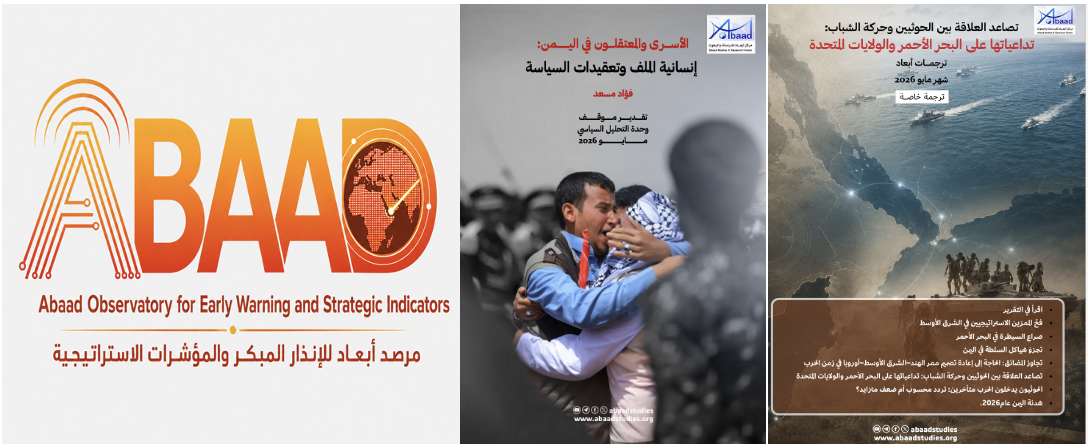
وعكست هذه الحصيلة توجه المركز نحو تطوير أدوات بحثية أكثر انتظامًا في متابعة التحولات السياسية والأمنية والإنسانية، وتعزيز حضور المعرفة اليمنية في النقاشات الإقليمية والدولية. وتمثلت أبرز أنشطة المركز خلال الشهر في إطلاق مرصد أبعاد للإنذار المبكر والمؤشرات الاستراتيجية، وإصدار ترجمات أبعاد لمايو 2026، إلى جانب نشر دراسة تحليلية حول الأسرى والمعتقلين في اليمن.
إطلاق مرصد أبعاد للإنذار المبكر والمؤشرات الاستراتيجية
دشن المركز خلال مايو مشروع مرصد أبعاد للإنذار المبكر والمؤشرات الاستراتيجية، بوصفه أحد البرامج البحثية النوعية الهادفة إلى رصد وتحليل التطورات اليومية في اليمن ومحيطه الإقليمي، وتحويل المعلومات المتفرقة إلى مؤشرات منظمة قابلة للقراءة والتقدير.
ويعتمد المرصد على منهجية متعددة المراحل تشمل جمع المعلومات، وفرزها، وتصنيفها، وتحليل اتجاهاتها، وربطها بالسياقات السياسية والاقتصادية والعسكرية والأمنية والإنسانية. وتشير خلاصة رصد مايو 2026 إلى أن اليمن يقف أمام “فرصة محدودة لكنها مهمة” لبناء الثقة، في ظل استمرار هشاشة المشهد السياسي والأمني والإنساني.
ويأتي إطلاق المرصد في إطار سعي مركز أبعاد إلى تطوير أدوات بحثية تساعد صناع القرار، والباحثين، ووسائل الإعلام، والجهات المعنية على فهم التحولات المتسارعة، واستشراف المخاطر والفرص، وتقديم قراءات أكثر انتظامًا لمسارات الصراع والسلام في اليمن.
ترجمات أبعاد: اليمن والبحر الأحمر في قلب التحولات الدولية
وضمن نشاطه المعرفي الشهري، أصدر المركز ترجمات أبعاد لمايو 2026، التي ركزت على قضايا البحر الأحمر وباب المندب والتحولات الجيوسياسية المرتبطة باليمن.
وتبرز هذه الترجمات أن اليمن والبحر الأحمر وباب المندب باتت في قلب معادلة استراتيجية أوسع، تتداخل فيها قضايا الحرب والسلام، والاقتصاد والأمن، وصراع النفوذ الإقليمي والدولي.
ولا تقتصر أهمية هذه الترجمات على نقل ما تنتجه مراكز التفكير ووسائل الإعلام الدولية، بل تمتد إلى إعادة تقديمه للقارئ العربي ضمن سياق تحليلي يساعد على فهم موقع اليمن في التحولات الجارية، خصوصًا مع تصاعد أهمية البحر الأحمر بوصفه مساحة حيوية للأمن الإقليمي، والتجارة العالمية، والتنافس الدولي.
دراسة الأسرى والمعتقلين في اليمن: الملف الإنساني وتعقيدات السياسة
وفي ملف إنساني وسياسي بالغ الحساسية، نشر مركز أبعاد دراسة بعنوان "الأسرى والمعتقلون في اليمن: إنسانية الملف وتعقيدات السياسة" تناولت ملف الأسرى والمعتقلين باعتباره أحد أكثر ملفات الحرب اليمنية تعقيدًا، ليس فقط بسبب أبعاده الإنسانية، بل أيضًا بسبب تحوله إلى ورقة ضغط سياسية وعسكرية تستخدمها أطراف الصراع في مسارات التفاوض والتصعيد والتهدئة.
وتشير الدراسة إلى جولة عمّان في مايو 2026 لتي تم خلالها الاتفاق على تبادل يشمل أكثر من 1700 أسير ومعتقل من الطرفين بوصفها محطة مهمة في مسار طويل من التعثرات والاختراقات الجزئية.
وتبرز أهمية الدراسة في أنها لا تكتفي بوصف المعاناة الإنسانية للأسرى والمعتقلين وذويهم، بل تربط الملف بسياقات انعدام الثقة، وتعثر مسارات التفاوض، وتداخل الحسابات المحلية والإقليمية. كما تؤكد أن أي تقدم في هذا الملف يمكن أن يشكل مدخلًا مهمًا لبناء الثقة، لكنه سيظل معرضًا للتوظيف السياسي ما لم يتحول إلى مسار إنساني مستقل ومستدام.