





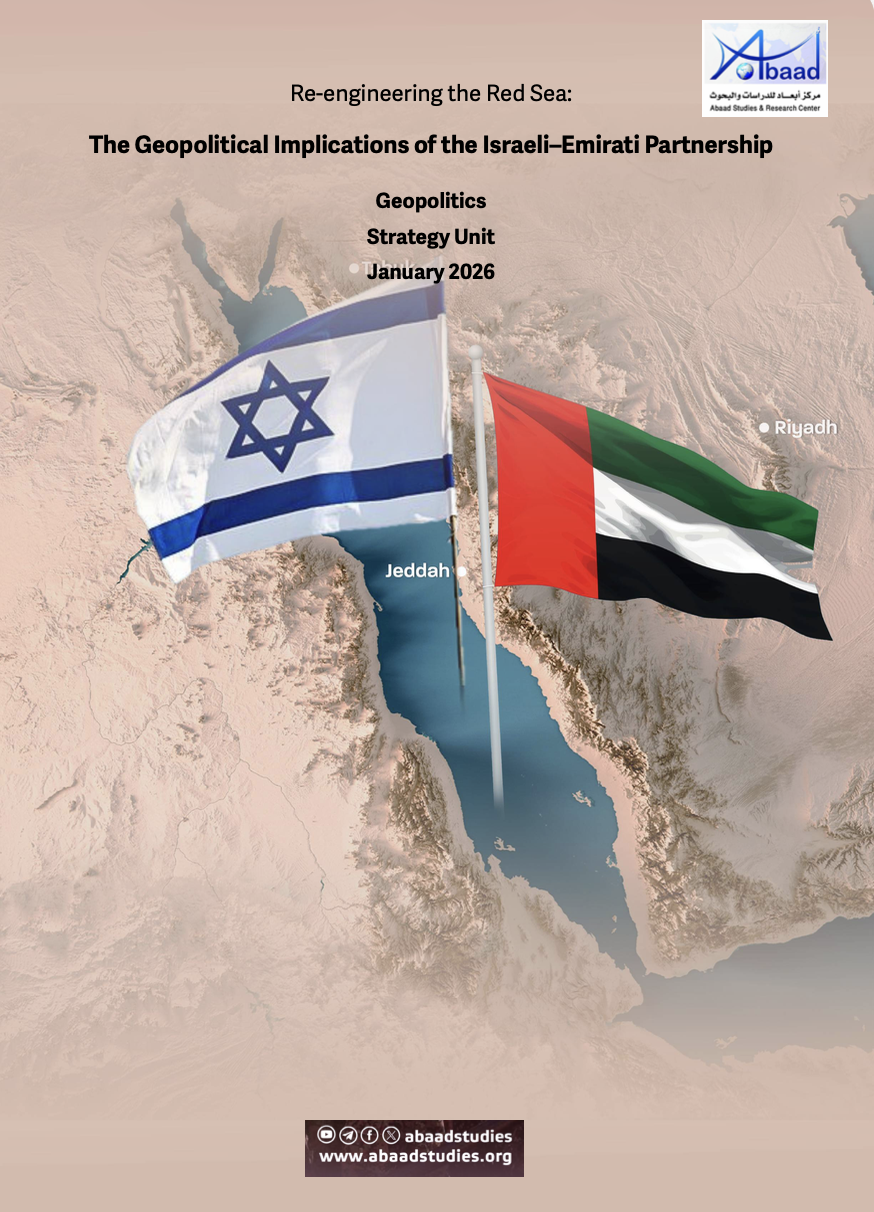
Re-engineering the Red Sea:The Geopolitical Implications of the Israeli–Emirati Partnership
Introduction
The Red Sea and the Horn of Africa are undergoing a profound transformation, driven by the gradual disintegration of the post–Cold War security architecture that long underpinned regional stability. The fragile equilibrium that once governed this strategic space has eroded, giving way to a far more volatile and competitive security environment. At the center of this shift lies the convergence of strategic interests within an increasingly assertive Israeli–Emirati axis. Having moved well beyond diplomatic normalization, this partnership has evolved into a deep and operational security alignment, triggering a series of rapid initiatives that are reshaping regional power balances and contesting control over critical maritime corridors.
Historically, the Red Sea functioned as a strategic “contact zone” linking two distinct security systems: the Middle Eastern security complex to the north and east, and the Horn of Africa security system to the west. Developments during 2024–2025, however, have effectively collapsed this distinction, fusing the two into a single, tightly interlinked Red Sea security complex. As a result, political and military dynamics on either shore now reverberate across the entire region with unprecedented speed and intensity.
Within this theater, a pronounced butterfly effect now prevails: a diplomatic decision in Hargeisa can ignite a political crisis in Aden, destabilize Gulf markets, and in turn prompt military deployments as far afield as Islamabad.
This paper examines the strategic significance of two pivotal moves within this broader realignment: Israel’s formal recognition of Somaliland and its parallel engagement with initiatives aimed at advancing the secession of southern Yemen. It assesses the existential implications of these developments for Saudi Arabia’s national security and for the broader Arab security order, while also analyzing the counter-alliances and deterrence strategies that Riyadh has begun to assemble in response to this shifting geopolitical landscape.
These developments should not be understood as isolated or episodic events. Rather, they represent interconnected components of a wider contest over influence, control of global commercial arteries, and the reconfiguration of the security map in one of the world’s most strategically vital regions. As the old order continues to unravel, a new strategic axis is actively reengineering the Red Sea and the Horn of Africa, with far-reaching consequences for regional and global stability.
First: The Emirati–Israeli Axis: Origins and Strategic Objectives in Controlling Maritime Corridors
The current strategic environment is shaped by a discernible retreat of U.S. power. The U.S.-led Prosperity Guardian coalition in 2024 and 2025 failed to decisively neutralize Houthi maritime capabilities, creating a strategic security vacuum along critical waterways.
Regional actors have consequently concluded that Washington is either unwilling or unable to impose stability along key coastlines. Documents associated with “Project 2025” and policy discourse emanating from the Trump administration point to an "offshore balancing" approach grounded in transactional politics—one that encourages regional states to act as their own security providers. This has accelerated competition for bases and partnerships, as actors rushed to impose faits accomplis on the ground before a coherent U.S. policy fully crystallizes. Within this context, the UAE and Israel have seized a critical opportunity to engineer a new regional reality and impose it on surrounding States[1].
The emergence of an Emirati–Israeli cooperation axis—opaque in its details yet operationally effective—represents a strategic shift that goes far beyond the diplomatic scope of the Abraham Accords. This axis encompasses deep military and intelligence coordination aimed at asserting influence and control over vital maritime routes extending from the Indian Ocean to the Red Sea, with particular focus on the Bab al-Mandab Strait.
This maritime strategy—best understood as a form of (Thalassocracy)—pursues two parallel objectives. First, it seeks to counter what they portray as threats posed by Iran and its Houthi proxy to maritime security. Second, it advances broader economic and geopolitical ambitions designed to secure Abu Dhabi and Tel Aviv a central role in global trade and energy security.
Normalization has thus evolved into an active security partnership, most clearly manifested in two synchronized moves on opposite shores of the Gulf of Aden.
1. Recognition of “Somaliland”: Israel’s Forward Operating Base in the Horn of Africa
Israel’s announcement on 26 December 2025 recognizing “Somaliland” as a sovereign state was not a symbolic diplomatic gesture. Rather, it marked the culmination of months of intensive intelligence and diplomatic activity, facilitated by decisive Emirati mediation.
The strategic objective of this move extends well beyond gaining a new ally. At its core, it aims to secure an advanced military and intelligence foothold for Israel in one of the world’s most geopolitically sensitive locations. While the Abu Dhabi–Tel Aviv axis publicly frames the step as necessary to monitor and deter Houthi and Iranian threats, this justification serves largely as strategic pretext. In practice, the move establishes a ring of pressure not only around both shores of the Bab al-Mandab Strait, but also around the national security of Saudi Arabia, Egypt, and most Red Sea littoral states—placing them under the strategic shadow of a newly dominant alliance.
Transforming “Somaliland” from a marginal entity on the Horn of Africa map into a cornerstone of Israel’s emerging maritime security doctrine fundamentally reshapes security dynamics in the southern Red Sea. Analyses drawn from Israeli media and think-tank reporting suggest that the recognition includes undisclosed provisions related to military positioning.
In exchange for recognition and promises to facilitate diplomatic access to Washington, Israel reportedly secured strategic privileges at Berbera Port and its airport. This grants the Israeli Navy and Air Force an advanced foothold at the southern gateway of the Red Sea, effectively converting Somaliland into a strategic pivot that breaks Israel’s long-standing geographic isolation in the Red Sea basin. It also provides Israel with direct tools to strike adversaries and exert pressure on Turkey, Saudi Arabia, Egypt, and other regional actors—closely coordinated with its Emirati partner.
This presence enables Israel to:
- Monitor strategic depth: This situation allows Israel to track naval movements in the Gulf of Aden and the Indian Ocean, particularly those connected to Iran, Pakistan, and Turkey. It also aligns with U.S. interests in monitoring Chinese maritime activity and places Israel near key military facilities around the Bab al-Mandab.
- Establish a military base: Potentially develop a permanent Israeli military base in Somaliland—likely in Berbera or Zeila—serving as an “unsinkable aircraft carrier” in the southern Gulf of Aden[2].
- Conduct operations against the Houthis: Somaliland’s proximity to Yemen’s coast (approximately 300–500 km) provides Israel with operational advantages unavailable from distant bases such as Eilat. Advanced radar and early-warning systems could detect Houthi missiles and drones at launch, enabling more effective interception. Berbera could also serve as a forward operating base for naval commandos and unmanned systems conducting precision strikes against military infrastructure in Yemen without reliance for long and operationally complex flight routes.
This military footprint alters the strategic equation in the southern Red Sea, granting Israel unprecedented autonomy of action beyond the constraints of hesitant international coalitions.
- Control maritime corridors: Enhance the ability to threaten commercial shipping bound for the Suez Canal and influence Gulf—particularly oil—trade flows.
- Normalization and state fragmentation: By situating recognition within the spirit of the Abraham Accords and seeking to formally integrate Somaliland into the normalization framework, Israel aims to expand its legitimacy in the Horn of Africa[3]. Regional states, however, view this as part of a broader strategy to weaken centralized Arab states by encouraging separatist movements—raising fears of regional “Balkanization” and state fragmentation into fragile micro-states[4].
Israel’s move can be interpreted as an updated iteration of the "Periphery Doctrine" articulated by David Ben-Gurion in the 1950s, which sought alliances with non-Arab states surrounding the Arab world. In its 2025 form, the doctrine targets "sub-state actors"—breakaway regions and quasi-states seeking international legitimacy[5].
From Tel Aviv’s perspective, Somaliland represents an ideal case: relatively stable, strategically located, diplomatically isolated, and in urgent need of a powerful patron willing to defy international consensus. By conferring legitimacy on such an entity, Israel effectively creates a "functional client state"—one that owes its status to Israeli sponsorship and serves as a forward base for Israeli interests in a historically hostile region.
Regionally, Israel’s recognition triggered sharp backlash. Mogadishu denounced the move as a direct act of aggression aimed at destabilizing the region[6]. Saudi Arabia, other GCC states (with the exception of the UAE), Egypt, Turkey, and Pakistan—most of them key U.S. allies—expressed strong opposition, viewing the decision as a serious threat to the delicate balance in the Horn of Africa.
The Houthis, for their part, declared unequivocally that any Israeli presence in Somaliland would constitute a “legitimate military target,” raising the risk of dangerous escalation and further militarization of vital waterways.
Internationally, the decision provoked widespread outrage, culminating in an emergency UN Security Council session on 29 December 2025. Israel appeared diplomatically isolated as the Arab Group and the African Union condemned the move as a violation of Somalia’s sovereignty and warned that it could open a "Pandora’s box" of separatist movements across the African continent—from Biafra in Nigeria to Ambazonia in Cameroon[7].
While the United States stood largely alone in offering implicit defense of the Israeli move, countries such as France and Djibouti expressed deep concern over the deterioration of regional stability and the encroachment on their traditional spheres of influence[8]. The recognition has widely been interpreted as part of a broader “Greater Israel” strategic vision—one that seeks to bypass Israel’s immediate Arab neighborhood and project influence into the third strategic ring of the Horn of Africa.
2. The Southern Yemen Secession Project: The Land-Based Arm of the Maritime Axis
The Southern Transitional Council (STC) in Yemen and the Republic of Somaliland represent two sides of the same coin within the new Emirati–Israeli regional strategy aimed at redrawing political boundaries. STC leaders view the “Hargeisa model” as a replicable political roadmap for securing international recognition and imposing a fait accompli of secession in Aden. Both entities face strikingly similar structural challenges: they exercise territorial control and command organized military forces, yet lack legal international recognition. This shared condition renders them natural allies in a transactional pursuit of legitimacy in exchange for strategic concessions.
This convergence has driven factions within the STC—including its chairman, Aidarous al-Zubaidi—to intensify outreach to Zionist and Western political circles, presenting themselves as reliable partners in safeguarding maritime corridors[9]. Accordingly, while the Horn of Africa witnessed accelerated maneuvering, the second arm of the Emirati–Israeli axis was simultaneously at work reshaping the opposite shore of the Gulf of Aden.
Sustained Emirati backing of the STC cannot be understood in isolation from this broader strategy. The STC’s seizure of the strategically critical governorates of Hadramout and Al-Mahra in December 2025 was not merely another episode in Yemen’s internal conflict; rather, it bore the hallmarks of a coordinated and deliberate “transfer of control” designed to engineer a fully compliant southern entity aligned with Abu Dhabi. [10]
For Saudi Arabia, this move constituted a severe strategic setback. Riyadh’s influence over the Yemeni file diminished sharply, forcing the withdrawal of its forces from Aden and its airport. Having opposed the offensive and characterized it as an “unjustified and unilateral escalation,” Saudi Arabia found itself in a direct confrontation with its Emirati ally and its local proxies.
On 26 December 2025, Saudi airstrikes targeted STC deployments in Hadramout thereby transforming a political dispute into open military confrontation, exposing the collapse of the original coalition’s unity and underscoring the depth of Riyadh’s condition of “strategic encirclement.”
The Emirati objective, however, was unambiguous: entrenching the reality of southern secession and establishing a loyal political entity controlling strategic ports and critical islands overlooking the Gulf of Aden and the Bab al-Mandab Strait. Through its support of the STC, Abu Dhabi secures leverage over a vital maritime artery while constructing a proxy state that serves its interests. Simultaneously, this arrangement places sustained pressure on the national security of Saudi Arabia and neighboring Oman, compelling both to accommodate Emirati—and Israeli—policy preferences.
The STC markets itself to Western capitals and Israel as a secular force capable of containing terrorism, countering Houthi extremism, and protecting international shipping along the northern shore of Bab al-Mandab[11] . This narrative is designed to entice Tel Aviv by offering an Arab partner controlling a geopolitically critical maritime chokepoints, thereby completing the strategic security ring jointly constructed by Israel and the UAE.
This approach goes beyond tactical political maneuvering. It reveals a deep structural convergence between the southern secessionist project and the Emirati–Israeli vision for regional security. Under this framework, the prospective southern entity would function as a connective node within a broader security and economic axis extending from the Gulf to the Horn of Africa. The emergence of such an entity would not represent full sovereignty in the conventional sense. Rather, it would function as an integral component of the Emirati–Israeli security architecture, exercising control over strategic coastlines and key ports such as Aden, and completing a regional network of military and logistical bases established by Abu Dhabi and Tel Aviv.
3. The Control Network: Military Bases and Intelligence Integration
The United Arab Emirates has pursued the construction of an expansive network of military bases, commercial ports, and intelligence nodes stretching from the Indian and Pakistani coasts, through the Strait of Hormuz, Socotra, and Bab al-Mandab, to the Horn of Africa. [12] Consequently, Emirati–Israeli patronage of separatist movements extends well beyond political and financial backing; it rests on a meticulously developed military and intelligence infrastructure assembled over several years.
Abu Dhabi has effectively established what may be described as a “control ring”—a dense web of military, logistical, and intelligence installations extending from the Socotra archipelago in the Indian Ocean, through the port of Mocha and Mayyun (Perim) Island in Bab al-Mandab, to the Horn of Africa’s coastline at Berbera (Somaliland) and Bosaso (Puntland).
• The “Crystal Ball” Project: This Emirati-managed network grants the axis de facto control over one of the world’s most sensitive maritime corridors. More critically, it involves direct Israeli participation in the design and operation of the system. Intelligence reports confirm the presence of Israeli officers and technical experts on Socotra Island, where advanced Israeli radar and electronic surveillance systems have been installed. These systems enable real-time monitoring of Houthi movements and provide early-warning capabilities against missile and maritime threats.
Intelligence cooperation reaches its apex through a joint operations hub reportedly codenamed “Crystal Ball.” Through this mechanism, Abu Dhabi and Tel Aviv exchange data collected from satellites, unmanned aerial vehicles, and electronic surveillance systems. According to confidential promotional documents, the base aims to “design, deploy, and enhance regional intelligence capabilities in support of energy security and international trade”[13].
The function of this network extends beyond maritime surveillance into overt power projection. Bases in Berbera and Bosaso serve not only as monitoring hubs but also as critical logistical centers facilitating Emirati influence deep within the African continent, including direct support for Sudan’s Rapid Support Forces (RSF). This expansion transforms what is presented as a defensive architecture into an offensive geopolitical instrument, consolidating the UAE’s role as a transregional power with operational reach across West Asia and the Horn of Africa. Simultaneously, Israel gains the ability to exert pressure on the Suez Canal by destabilizing security in Bab al-Mandab, effectively rendering it a zone of persistent tension.
• Preparing the Ground for Israel Around Saudi Arabia:
The Emirati influence map reveals a clear pattern of “strategic conditioning” to facilitate Israeli presence around Saudi Arabia. Supporting the STC’s control over Hadramout and Al-Mahra places Saudi Arabia’s southern borders under the authority of a force aligned with Israel, eroding the Kingdom’s traditional buffer of “secure neighborhood” and exposing it to security leverage. [14]
At the same time, the normalization track between Israel and Somaliland, coupled with opening Socotra to Israeli experts, completes a maritime encirclement stretching from the Strait of Hormuz to the Suez Canal. This arc systematically diminishes Saudi Arabia’s traditional influence and forces Riyadh to confront a new security reality in which Tel Aviv emerges as an unavoidable stakeholder in maritime security arrangements.
4. Unity of Arenas (Israeli–Emirati)
The events of late 2025 were far from coincidental. The precise coordination between the Southern Transitional Council’s military offensive in Hadramout, Israel’s recognition of Somaliland, and the intensified movements of the Rapid Support Forces (RSF) in Sudan strongly suggests the existence of a “joint operations room,” or at the very least a high level of strategic coordination designed to accelerate the imposition of faits accomplis before any shift in the U.S. administration or broader changes in the international environment. This pattern may be described as a doctrine of “unity of arenas,” analogous—by substitution rather than imitation—to the Iranian "unity of arenas" model developed within the so-called Axis of Resistance.
The theaters of Yemen and the Horn of Africa are closely interconnected with developments in Libya and Sudan, where the same sponsoring actors—namely the United Arab Emirates and Israel—are visibly active, relying on similar actors centered on mercenaries and transnational militias.
In the Libyan theater, Field Marshal Khalifa Haftar and his son Saddam constitute the central pillar of this axis in North Africa. Territories under their control in eastern and southern Libya have been transformed into a vital “transit zone” used for the movement of weapons, fuel, and fighters arriving from the UAE and Russia toward Sudan’s Rapid Support Forces.
Within this framework, the “Tariq bin Ziyad Brigade,” led by Saddam Haftar, has emerged as a principal strike force. The brigade faces accusations of war crimes and the exploitation of state assets, including the alleged looting of the Central Bank in Benghazi, to secure funding for the axis’s operations. In parallel with this military role, Saddam Haftar reportedly embarked on a covert normalization track through undisclosed visits to Tel Aviv beginning in November 2021, seeking military and diplomatic backing in exchange for promises of future normalization. This engagement reportedly culminated in Israel supplying Haftar’s forces with sniper equipment, night-vision devices, and drones, significantly enhancing their battlefield capabilities.
In Sudan, the Rapid Support Forces under Mohamed Hamdan Dagalo (“Hemedti”) represent a paradigmatic case of the “militia-state” concept under Emirati patronage, aimed at undermining the national army as an institution. The RSF sustains its operations through a self-financing system that bypasses official state channels, chiefly by controlling gold mines in Jebel Amer and exporting gold via militia-controlled airports directly to Dubai.
The RSF also benefits from sophisticated supply lines for advanced weaponry, including anti-aircraft systems and drones routed through Chad and Libya. At the same time, Israeli engagement with Hemedti has reportedly continued, as he presents himself as a bulwark against Islamist movements. This positioning has enabled him to obtain advanced Israeli surveillance technologies, despite Israel’s formal relations with Sudan’s army leadership.
The formation of this complex axis—across political, military, and intelligence dimensions—constitutes a direct threat to the national security of major regional powers, compelling them to fundamentally reassess their strategic assessments.
Second: The Fragmentation of Yemen and Its Threat to Saudi National Security
From Riyadh’s perspective, the southern Yemen secession project—in its current form tied to the Emirati–Israeli axis—represents a grave strategic threat that far exceeds the conventional implications of Yemen’s internal conflict.
Saudi decision-making circles do not view this project as an allied maneuver to counter the Houthis, but rather as a systematic process of “strategic encirclement” designed to serve the interests of a rival, or even hostile, entity directly along the Kingdom’s southern border.
The success of this project would deprive Saudi Arabia of its strategic depth in the Arabian Peninsula, erode its historical influence, and place it squarely within a classic “security dilemma,” wherein actions undertaken by a nominal ally—the UAE—have come to pose a direct threat to Saudi national security.
1. The Functional Link Between the Secession Project and the Israeli Agenda
What most alarms Riyadh is the direct functional and operational linkage between the southern secession project and Israel’s security agenda. Accumulating evidence suggests that this is not a fleeting convergence of interests, but rather a deep strategic coordination aimed at reengineering regional security structures. This coordination is evident in the network of shared military and intelligence bases stretching from Socotra Island in the Indian Ocean to the Horn of Africa’s coastline, where advanced Israeli radar and electronic surveillance systems have been deployed.
The existence of the joint intelligence base known as “Crystal Ball” indicates that the emergence of a state south of the Kingdom—alongside aligned entities in Somalia and Sudan—would grant this network unprecedented strategic depth along the southern shore of the Red Sea. Such an arrangement would enable Israel to comprehensively monitor and encircle regional states with high efficiency.
In this sense, the UAE is increasingly perceived by many regional actors not as an independent player, but as performing a “regional function in service of a broader Israeli project.” This project extends beyond confronting the Houthis; it seeks to transform the southern Arabian Peninsula into a permanent sphere of Israeli influence, fundamentally altering the region’s long-term balance of power and security equations.
2. Implications of Secession: From Strategic Encirclement to Permanent Instability
The success of a “separatist/non-state actors axis” in consolidating this configuration would carry severe and immediate consequences for Saudi Arabia’s national security. First, the Kingdom would face effective encirclement by land and sea from a rival axis exerting control over critical southern maritime corridors. Second, its extensive 600-kilometer southern border would be placed under the influence of a political-military entity backed by strategic adversaries, generating a condition of prolonged instability along Saudi Arabia’s most exposed flank.
Riyadh’s reaction to the STC’s moves in December 2025 provides clear evidence that it regarded this scenario as a red-line violation and an existential threat. The Kingdom issued an official statement describing the actions as an “unjustified escalation” carried out “unilaterally,” and demanded the immediate withdrawal of STC forces. When these demands were ignored, the Saudi Air Force struck an Emirati weapons shipment at Mukalla port and directly accused the UAE, declaring that “Saudi national security is a red line.” Such an accusation is rare among Gulf Cooperation Council states.
These developments ultimately led to the withdrawal of Emirati forces from Yemen, enabling the Nation’s Shield forces to advance and reassert control over Hadramout, Al-Mahra, and Shabwa, while Emirati presence persisted in Socotra.
This military escalation underscores the magnitude of the threat perceived by Riyadh. The issue had ceased to be a mere dispute over Yemen conflict management and evolved into a direct confrontation aimed at preventing a redrawing of the geopolitical map detrimental to Saudi vital interests.
Faced with this multifaceted threat, Riyadh did not remain passive; instead, it moved decisively to construct a new defensive alliance architecture to protect its core interests and restore regional balance.
Third: The Counter-Strategy — Saudi Deterrence and “Alliances of Necessity”
Recognizing the dangers of “strategic encirclement” amid this rapidly evolving landscape, Riyadh concluded that reliance on U.S. security guarantees was no longer sufficient, and that “partnerships” with certain Gulf allies had become competitive—if not openly adversarial. Accordingly, in 2025 Saudi Arabia launched a strategy of “multi-layered deterrence” by forging qualitative alliances with major Sunni powers in the region.
This new approach—often described as a “Sunni Shield”—is not merely reactive, but represents a fundamental shift toward a different type of alliance. In contrast to the Emirati–Israeli maritime (thalassocratic) axis, which relies on commercial-military hubs and non-state actors, Riyadh has pursued the construction of a land-based (tellurocratic) alliance grounded in traditional state-to-state defense agreements. The objective is to secure Saudi strategic depth, establish a new balance of power through indigenous capabilities, and rely on dependable partnerships.
In Yemen, Riyadh seized the initiative on the ground by drawing clear “red lines,” supporting and financing Yemeni forces to dismantle the separatist project that posed a direct threat to its national security.
1. Saudi Arabia and Egypt: Early Strategic Awareness
Saudi Arabia and the Arab Republic of Egypt recognized early on that silence in the face of geopolitical transformations in the Red Sea would result in the loss of their historical influence to the Emirati–Israeli axis. Consequently, both states began constructing a joint diplomatic and military “bulwark.” Reports indicate Saudi-Egyptian intelligence coordination in support of Yemen’s Nation’s Shield forces, aimed at preventing vital areas from falling into separatist control. [15]
The continuation and intensification of joint military exercises further reflect a shared Saudi-Egyptian determination to preserve the Red Sea’s identity as an “Arab lake” and prevent its internationalization or “Israelization.” [16]
Egypt, for its part, has expanded its military presence in the Horn of Africa through joint defense agreements with Somalia (Mogadishu) and by providing direct military support to counter Ethiopian and Israeli ambitions in Somaliland. Cairo also aligns with Riyadh in supporting national state institutions in Sudan and Libya against Emirati-backed militias.
Egypt views the establishment of an Israeli military base in Berbera as an existential threat to the Suez Canal and considers the preservation of Somali and Yemeni unity the only safeguard against the emergence of alternative trade routes designed to undermine the Egyptian economy. Accordingly, Saudi-Egyptian coordination has reached its highest historical levels, focused on protecting the Arab world’s “southern gateway.”
2- Saudi Arabia and Pakistan: The Implicit Nuclear Deterrence Card
In parallel with its ground maneuvers, Saudi Arabia significantly reinforced its military alliance with Pakistan in September 2025—a move widely described as a “nuclear shockwave.” Under this arrangement, Islamabad effectively placed its defensive and deterrent capabilities at the Kingdom’s disposal in the event of external aggression.
The objective of this alliance is twofold: to offset Israel’s technological superiority in the region and to send a clear message to both Iran and Israel that Riyadh possesses strategic depth and deterrent power extending well beyond the Arab geography. This, in turn, constrains adversaries’ ability to pressure or blackmail the Saudi Kingdom, particularly on maritime security. [17]The agreement also re-links Gulf security with South Asian security, reshuffling the strategic calculus of actors seeking unilateral dominance in the region.
This partnership goes well beyond the historically transactional Riyadh–Islamabad relationship—often limited to financial assistance in exchange for military support—to establish a formal, institutionalized commitment akin to a collective defense clause under NATO. It thus represents a fundamental shift in the region’s strategic architecture. Any doubts about the depth of this commitment were dispelled when Pakistan’s Defense Minister, Khawaja Asif, stated that “ If either Pakistan or Saudi Arabia is attacked from anywhere, it will be considered an attack on both nations, and we will respond together,” affirming that Pakistan’s capabilities would be fully available to the Kingdom.
This statement has been widely interpreted as placing Saudi Arabia under an implicit Pakistani nuclear umbrella. As the only nuclear-armed state in the Muslim world, Pakistan—through an agreement echoing the language of NATO’s Article Five—has fundamentally altered the regional deterrence equation in the Red Sea basin. The message is directed not only at Iran, which stands on the threshold of nuclear capability, but also at Israel, the Middle East’s sole nuclear power.
Riyadh is no longer relying exclusively on conventional deterrence; it has added a formidable psychological and strategic deterrent to its arsenal. The purpose of this alliance is not to initiate aggression, but to prevent any actor from contemplating a strategic attack on the Kingdom, fully aware that the cost could be catastrophic.
3- Saudi Arabia and Turkey: Rapprochement to Enhance Naval and Conventional Military Capabilities
To complement the strategic deterrence provided by the Pakistan alliance, Riyadh has moved to strengthen its conventional military capabilities—particularly in the naval and air domains—through closer ties with two pivotal regional powers: Turkey and Egypt.
Saudi Arabia has set aside previous political differences with Ankara to gain access to Turkey’s advanced defense-industrial base, especially in unmanned aerial systems and naval frigates. This rapprochement was clearly reflected in the “Eastern Mediterranean 2025” (Doğu Akdeniz 2025) exercises, among the largest Turkish-led naval drills, which included Saudi and Pakistani naval and air units. The exercises focused on anti-submarine warfare, amphibious operations, and the protection of sea lines of communication—sending a clear message about the three countries’ ability to form a joint maritime force capable of operating in both the Red Sea and the Mediterranean. [18]
Intensified cooperation in the localization of drone base—such as Bayraktar and Akıncı systems—and missile technologies grants Saudi Arabia a degree of strategic autonomy in armaments, reducing Western or Israeli leverage through technological pressure. [19]
This shift toward diversifying partners and weapons suppliers reflects a new Saudi strategy aimed at building a multipolar security architecture capable of safeguarding national interests independently of fluctuations in U.S. policy or the ambitions of regional allies.
Turkey also remains a strategic ally of a unified Somalia, having provided air and technical support to the Somali National Army to prevent a de facto secession backed by Tel Aviv and Addis Ababa. This convergence of interests among Saudi Arabia, Egypt, Turkey, and Pakistan has given rise to an undeclared “quadrilateral axis” designed to protect national sovereignty and prevent the Red Sea from becoming an “Israeli lake.”
This alliance seeks to undermine Israel’s “musical chairs” strategy by strengthening central states and imposing new rules of engagement that deny militias control over vital waterways.
The resulting competition among rival axes places Iran and its Houthi proxy in a complex strategic position, forcing them to reassess their assessment between exploiting opportunities and confronting existential risks.
Fourth: the Iranian–Houthi Axis: Between Exploiting Chaos and Confronting a Shared Threat
Iran and the Houthi group now find themselves at the center of a profound strategic paradox. On one hand, the deep rift and direct military confrontation between Saudi Arabia and the UAE present an invaluable tactical opportunity, eroding the alliance originally formed to counter them. On the other hand, the prospect of a direct Israeli military and intelligence presence along their southern periphery—in Somaliland and southern Yemen—constitutes an existential strategic threat that could compel a wholesale reprioritization of their agendas. This new reality leaves them caught between exploiting chaos and confronting a common danger.
1- Investing in Chaos: Iranian and Houthi Roles between Rhetoric and Strategy
Tehran views Israel’s recognition of “Somaliland” as an ideal pretext to expand its footprint in the Red Sea under the banner of “anti-Zionism,” exploiting the development to portray its presence in Yemen as a national and Islamic imperative.
The Houthis, backed by Iran, have openly declared that any Israeli base in Somalia would be a legitimate target for their missiles and drones, effectively turning Somalia and Yemen into a direct arena of confrontation between Iran and Israel. Such a scenario serves Iran’s broader agenda by diverting attention from its domestic challenges and increasing its leverage in international negotiations.
Strategically, Iran has no interest in a stable or unified Yemen under an Arab framework. At the same time, it opposes the UAE-backed secessionist project led by the Southern Transitional Council, fearing a loss of influence in the south. Tehran thus pursues a policy of “controlled non-weakening” of its axis, encouraging a calibrated level of chaos that prevents Saudi Arabia from securing a decisive political or military victory.
Iran is actively exploiting the specter of an Israeli presence as a mobilizing narrative to rally Yemeni tribes behind the Houthis, reframing the conflict from a struggle over power into an “existential battle against Zionism.” This reframing prolongs the war and obstructs any prospects for a political settlement.
At the same time, the Houthis perceive the Emirati–Israeli alliance as an opportunity to reinforce their political legitimacyas the sole defenders of Yemen’s sovereignty and of Bab al-Mandab, capitalizing on the disarray and fragmentation within the anti-Houthi camp. The establishment of Israeli bases in Berbera or Socotra would effectively provide the Houthis with a green light to continue targeting international shipping under the pretext of “besieging the besieger,” while making it difficult for the international community to condemn their actions without simultaneously addressing what they frame as “Israeli provocations” in the region. This complex entanglement ultimately serves Houthi interests by consolidating their control in northern Yemen while rendering the south an exposed arena—both in security and social terms.
Iran’s broader strategy aims to transform the Gulf of Aden into a “second Strait of Hormuz,” where Tehran would possess the capacity to disrupt maritime traffic through local proxies. Israel’s recognition of “Somaliland” has provided Iran with a political and legal pretext to deepen its involvement in the Horn of Africa. Reports have already surfaced of Iranian attempts to open communication channels with Somali actors opposed to Israeli presence, raising the specter of Somalia’s transformation into “another Yemen,” where competing international agendas converge. Such a development would further complicate Saudi Arabia’s security environment, effectively surrounding the Kingdom with proxy conflicts on multiple fronts.
In sum, Iranian and Houthi strategies are working to weaken Arab powers by exploiting the strategic errors of the Abu Dhabi–Tel Aviv axis. The absence of a unified and resolute Arab vision on the issues of secession and foreign intervention has enabled Iran to present itself as a supposed “defender of state sovereignty”—an illusion that must be dismantled through the restoration of a Saudi–Egyptian initiative aimed at imposing a regional security order that expels all foreign interventions, whether Israeli or Iranian, and reasserts the primacy of the unified nation-state.
The interaction of these competing forces and axes has elevated Yemen’s unity from a domestic concern to a strategic imperative for regional security—an assessment that constitutes the core conclusion of this report.
Conclusion: The Imperative of Yemen’s Unity as a Pillar of Saudi and Arab National Security
In light of the profound changes analyzed above, the preservation of Yemen’s unity can no longer be treated as a purely internal matter or a political aspiration. It has become a paramount strategic necessity for both Saudi and broader Arab national security.
A synthesis of recent developments reveals a clear reality: the southern Yemen secession project, in its current form, has become an integral component of a wider regional geopolitical agenda led by the United Arab Emirates and Israel, aimed at reengineering the security architecture of the Red Sea and the Horn of Africa to serve their exclusive interests.
The success of this project would directly entrench a permanent Israeli military and intelligence presence along the Arabian Peninsula’s most vulnerable flank. Such a presence would extend beyond monitoring Iran and its proxies; it would constitute a form of strategic encirclement of Saudi Arabia, undermine the Kingdom’s role as a central regional power, and pose a long-term threat to the security of navigation through the Suez Canal—the lifeline of the Egyptian economy.
Accordingly, preserving Yemen’s unity—or, at a minimum, preventing its fragmentation and the emergence of a functional entity aligned with the Emirati–Israeli axis—has evolved from a principled political stance into an indispensable strategic imperative aimed at averting this catastrophic outcome. Yemen’s territorial integrity has therefore become the first line of defense not only for Saudi Arabia’s security and strategic depth, but also for the broader Arab national security system.
Any erosion of this unity under current conditions would pave the way for a far wider and more difficult-to-contain process of strategic fragmentation. Such a trajectory would transform the southern Red Sea from a vital global commercial artery into a contested geopolitical arena, where competing regional and international agendas collide at the expense of stability and the core interests of regional states.
More than ever, Yemen’s trajectory is now inextricably linked to the future of security and stability across the Middle East.
REFERENCES
[1] Exclusive: Somaliland president says recognition of state 'on the horizon' following Trump talks | Global development | The Guardian ، https://www.theguardian.com/global-development/2025/may/30/exclusive-somaliland-president-says-recognition-of-state-on-the-horizon-following-trump-talks
[2] Israel scores strategic win with Somaliland deal, but it comes with risk
[3]African Union fumes over Israel’s recognition of Somaliland
[4] It declared unilateral secession—why did Israel rush to recognize the secessionist Somaliland region? The Story Continues https://youtu.be/mNyo_peVKWU?list=TLGGKA0qPd53lZQwNzAxMjAyNg
[5] Somaliland and Israel—Considerations Regarding Recognition and Cooperation - INSS, ، https://www.inss.org.il/publication/somaliland/
[6] Israa'iil oo Somaliland u aqoonsatay dal madax-bannaan ، https://www.dawan.so/news/israaiil-oo-somaliland-u-aqoonsatay-dal-madax-bannaan
Israel becomes first country to recognise Somaliland as sovereign state, https://www.theguardian.com/world/2025/dec/26/israel-first-country-to-recognise-somaliland-sovereign-state
[7] African Union rejects 'any recognition of Somaliland' after Israel declaration - Arab News, ، https://www.arabnews.com/node/2627558/world
[8] Israel becomes first country to recognise Somaliland as sovereign state, ، https://www.theguardian.com/world/2025/dec/26/israel-first-country-to-recognise-somaliland-sovereign-state
[9] UAE-backed militia in Yemen reaches out to Israel for alliance ..., https://thecradle.co/articles/uae-backed-militia-in-yemen-reaches-out-to-israel-for-alliance-against-common-foes-report
[10] Access the Strategic Situation Assessment by the Abaad Center for Studies and Research:
Abaad Center Strategic Assessment: STC Control of Eastern Yemen Represents a Geopolitical Earthquake within the UAE’s “String of Pearls” Strategy and the Abraham Accords Framework https://abaadstudies.org/en/activities/topic/60181
[11] Israel, the UAE, and Yemen's South: The Politics of Unlikely Alliances, https://arabcenterdc.org/resource/israel-the-uae-and-yemens-south-the-politics-of-unlikely-alliances/
[12]How the UAE built a circle of bases to control the Gulf of Aden | Middle East Eye https://www.middleeasteye.net/news/uae-yemen-somalia-circle-bases-control-gulf-of-aden
[13] How the UAE built a circle of bases to control the Gulf of Aden https://www.middleeasteye.net/news/uae-yemen-somalia-circle-bases-control-gulf-of-aden
UAE, Israel Ink Pivotal Joint Cyber-Threat Intelligence Agreement https://www.darkreading.com/threat-intelligence/uae-israel-joint-cyber-threat-intelligence-agreement
[14] Israel, the UAE, and Yemen's South: The Politics of Unlikely Alliances, https://arabcenterdc.org/resource/israel-the-uae-and-yemens-south-the-politics-of-unlikely-alliances/
[15]Egypt closely monitoring Yemen developments, affirms support for unity and sovereigntyhttps://www.egypttoday.com/Article/1/144204/Egypt-closely-monitoring-Yemen-developments-affirms-support-for-unity-and
[16] audi Arabia hosts massive multinational Red Sea naval exercises - The New Arab, https://www.newarab.com/news/saudi-arabia-hosts-massive-multinational-red-sea-naval-exercises
[17] Could the Pakistani-Saudi Defense Pact Be the First Step Toward https://www.csis.org/analysis/could-pakistani-saudi-defense-pact-be-first-step-toward-nato-style-alliance
[18] Pakistan Navy's ATR-72 Touches Down in Turkey as Dogu Akdeniz 2025 Begins: A New Era of Pak-Turkey Naval Power - Defence Security Asia, ، https://defencesecurityasia.com/en/pakistan-navy-atr72-arrival-turkey-dogu-akdeniz-2025/
[19] Pakistan, Saudi Arabia Defense Pact: A Potential Game Changer for the Region, https://thediplomaticinsight.com/pak-saudi-defense-pact-potential-game-changer/