





Regional and International Implications of Houthi Control of Bab al-Mandab Strait
Abstract
This study examines the ongoing escalations in Yemen's western coast, with particular focus on Houthi control of the Bab al-Mandab Strait nearly a decade after the group was driven out of the area. The developments come amid continuing local, regional and international tensions, ongoing clashes between Yemeni government forces and allied military formations on one side and the Iran-backed Houthis on the other, as well as continued regional tension around the Strait of Hormuz in the Arabian Gulf, which Tehran seeks to use as a pressure and coercion card against the international community. With the Houthis—Iran’s local proxy in Yemen—now controlling the Bab al-Mandab Strait, the situation is increasingly prone to escalation on multiple levels.
The study also highlights the strategic importance of this global maritime corridor, which links Asia and Africa. Situated at the southern entrance to the Red Sea, it connects the Gulf of Aden, the Arabian Sea, and the Indian Ocean on one side, with the Mediterranean and Europe on the other.
It focuses on Iran's strategy in Bab al-Mandab and the Red Sea, an area of growing importance to Tehran in recent years. Recent developments have revealed Iran's interest in using strategic pressure points in critical waterways, directly in the Strait of Hormuz and indirectly in the Bab al-Mandab Strait.
The study also examines the regional and international implications, including threats to international navigation and global trade, rising transport and insurance costs, growing economic pressures, and the increased risk of new conflicts in the region. Taken together, these developments could lead to the further militarization of a major artery of global maritime commerce.
The Strategic Importance of Bab al-Mandab Strait
The Red Sea is strategically important because of its location between Asia and Africa. It connects Europe to Asia through the Mediterranean and links the Indian and Pacific Oceans through the Gulf of Aden and the Arabian Sea. It also lies adjacent to the world’s principal oil-producing region and serves as one of the major routes for global maritime trade, including a key corridor for transporting oil from the Arabian Gulf and Iran to European markets. Europe transports around 60 percent of its energy needs through this route, while roughly 25 percent of U.S. oil requirements are transported through it.[1]
The Red Sea is about 1,900 kilometers long, while its width ranges from around 20 kilometers at Bab al-Mandab to about 200 kilometers. Seven Arab states overlook it: Yemen, Somalia, Djibouti, Saudi Arabia, Sudan, Egypt and Jordan, in addition to Eritrea and Israel.
Its strategic importance increased after the opening of the Suez Canal in 1869, linking the Red Sea to the Mediterranean. The major colonial powers of the time - Britain, France and Italy - then sought to consolidate their positions in the Red Sea and at its southern entrance in Bab al-Mandab. Around four decades later, the three powers reached an agreement defining their interests in the Red Sea. Britain used Aden, which it had occupied since 1839, to expand its regional influence, particularly after occupying Egypt in 1882, while France established control over parts of the African coast after seizing Djibouti.
The Bab al-Mandab Strait is one of the world's most important international waterways because of the strategic importance of the Red Sea, the strait's distinctive geographic position, its control of the southern entrance to the Red Sea, and the fact that it forms part of the territorial waters of Asian and African states - Yemen, Djibouti and Eritrea. These strategic characteristics made the Red Sea a major focus of the strategies and colonial ambitions of great powers from the sixteenth century onward.[2]
Bab al-Mandab derives its strategic importance from its location at the southern entrance to the Red Sea. As a heavily trafficked maritime chokepoint, it forms part of one of the shortest sea routes linking East and West. Its position gives any actor capable of influencing the strait an important source of strategic leverage. Its importance therefore lies in its influence over global trade[3]. In addition to serving as the southern gateway to the Red Sea, it is the bottleneck linking the Red Sea to the Gulf of Aden and onward to the Arabian Sea, the Indian Ocean, and Southeast and East Asia on the Pacific. It also forms part of the maritime waterway connecting the Pacific and Indian oceans with the Mediterranean through the Red Sea and Suez Canal, and then with the Atlantic. [4]
The Bab al-Mandab Strait is among the world's most important maritime corridors because it connects the eastern and western parts of the globe and carries a substantial share of international trade and oil transport. According to studies, the Bab al-Mandab has exceptional importance compared with other international waterways because it is a critical convergence point for world commerce: most trade between the European Union on one side and China, Japan, India and the rest of Asia on the other passes through the strait. Furthermore, it serves as a major route for more than 30 percent of global oil movements, particularly exports from the Arabian Gulf and Iran.[5]
The strait's strategic importance is tied to a range of geographic and political factors affecting political actors across the Arab world and Africa. It also reflects the competition surrounding Bab al-Mandab. The Red Sea carries oil tankers, warships and commercial shipping, and constitutes both an economic and military link between the Mediterranean and the Indian Ocean. It functions as an oil artery from the Arabian Gulf to Europe and the United States, while the strait influences access routes connecting the Mediterranean and the Arabian Gulf.[6]
Bab al-Mandab is often ranked as the world's third most important strait after Malacca and Hormuz. Around 3.3 million barrels of oil reportedly pass through it each day, equivalent to about 4 percent of global oil demand, while some 21,000 ships transit it annually, carrying roughly 10 percent of global commercial shipments.[7]
Its military importance lies in its position as the southern chokepoint of the Red Sea and in the defensive advantages available at the sea's southern entrance, either from naturally protected elevated shores or from Perim Island, which sits astride the strait. Observation posts, surveillance sites, radar stations and military bases can all be established in such locations.[8]
Bab al-Mandab and the Red Sea in Iranian Strategy
There was no confirmed Iranian naval activity in the Red Sea from the 1979 Iranian Revolution until 2011. In early 2011, however, the Iranian Navy announced its entry into the Red Sea for the first time and said that one of its domestically produced submarines had crossed international waters there during a 68-day patrol.
The Red Sea's importance to Iran has grown with Tehran's wider regional influence, particularly in Africa. Iran has sought to benefit from widening tensions between a number of post-coup leaders in the Sahel and Western states, including the United States and France. In July 2023, then-Iranian president Ebrahim Raisi visited Uganda, Zimbabwe and Kenya, praising what he described as their resistance to colonialism and calling it an expression of 'awakening and vigilance.' Although he did not visit Mali, Burkina Faso or Niger, he praised those countries in September 2023 for resisting what he called'dominant European policies and colonialism.'[9]
From 2012 onward, Iran increasingly sought to expand its military presence and naval activity beyond the Arabian Gulf and Indian Ocean, especially into the Red Sea. In subsequent years, Tehran focused attention on Sudan and Eritrea, expressed interest in establishing a military base in Port Sudan, and sent several vessels to Sudan at a time when the country was facing Western isolation.
Since the beginning of these deployments in 2011, Iranian naval officials have said that sending military ships to the Red Sea is intended to secure the waterway, confront Somali piracy and expand Iran's naval presence in international waters in order to protect its trade.
Iran's initial presence relied on older conventional vessels, but in recent years it has invested in surface ships capable of carrying attack drones, helicopters and missiles - the same categories of weapons used by its Houthi allies in attacks on commercial vessels and in threatening international navigation.
Under an Iranian national security doctrine that seeks strategic depth of up to 5,000 kilometers, Tehran requires a military base in the Red Sea and another in the Mediterranean. Iranian strategic thinking has argued that 'the establishment of distant naval bases is no less important than nuclear technology, but worth dozens of times more for creating deterrence'[10]
Given Iran's current circumstances, following two rounds of military confrontation with the United States and Israel, the strategic importance of Bab al-Mandab and the Red Sea has increased further, particularly amid tensions around the Strait of Hormuz. Tehran seeks to preserve influence over Hormuz and use it to strengthen its regional leverage and support its economy, while Western states, led by the United States, seek to limit Iranian control over this vital corridor through a combination of military strikes, threats and negotiations conducted in a highly charged environment.
From this perspective, expanding Iranian influence over the maritime gateway opposite the Arabian Gulf - the Bab al-Mandab Strait at the southern end of the Red Sea - becomes increasingly important. Such influence does not necessarily have to be exercised directly. It can also operate through an armed actor aligned with Tehran, such as the Houthis, who have established control over the strategic strait since the beginning of this month.
It can therefore be argued that Iran's strategy creates short- and medium-term security and political threats and contributes to further regional tension. It may also transform the Red Sea from a regional maritime-security theater into an arena of 'international maritime security,' particularly as the international naval presence in the area continues to grow.[11]
The frantic Return to Bab al-Mandab
Houthi threats escalated in July after the internationally recognized government prevented an Iranian plane from landing at Sana'a Airport. The Houthis quickly announced what they called a policy of 'blockade-for-blockade' and began attacking Saudi vessels in the Red Sea as well as Saudi ports and facilities in the Kingdom's southern regions.
Inside Yemen, the Houthis have since August launched extensive ballistic-missile and drone attacks against government military positions and against several cities and residential districts in Marib and Hadramout. They also targeted the Red Sea port of Mocha with a number of missiles, bringing operations at the port to a complete halt.
Between 9 and 14 August 2026, Mocha and the area around its port witnessed an escalating wave of Houthi attacks involving approximately 40 missiles and 46 drones.[12]
The escalation began on August 9 with a large-scale attack that, according to military sources, killed seven people - four military personnel and three civilians - and wounded thirty others, while air defenses reported intercepting 11 drones. On August 11, the attacks extended into the Bab al-Mandab Strait with the targeting of the commercial vessel Tihama, killing four crew members and two Yemeni rescue personnel and wounding ten others. The Houthis then renewed their bombardment of Mocha on August 14 with six ballistic missiles, while the government reported four civilian deaths. At least 17 people were killed in this wave of attacks in less than a week.[13]
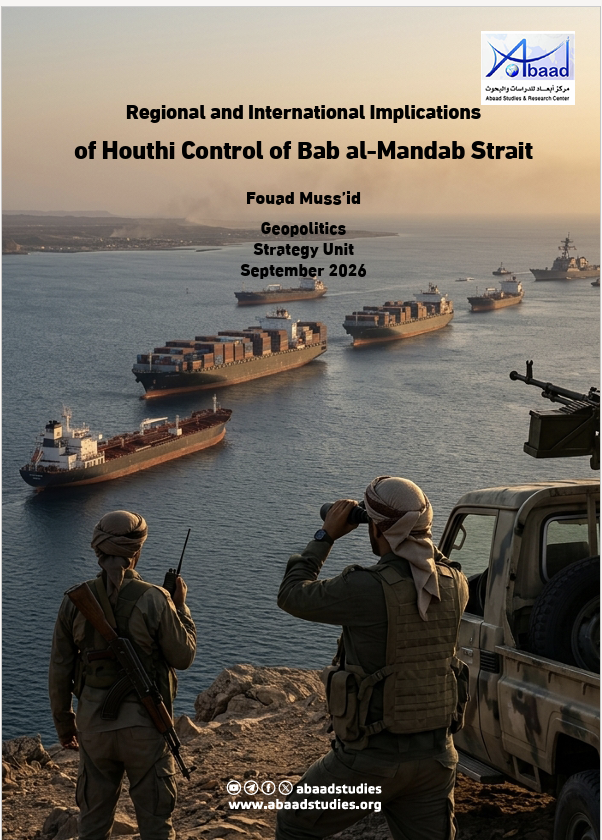
At the beginning of this month, the group launched a major military operation aimed at expanding its control over new areas in western Taiz Governorate and southern Hodeida Governorate. The first days produced little significant progress, but Houthi forces later achieved a breakthrough by capturing the strategically important Khalid bin al-Walid Camp as government forces and allied formations withdrew southward. This opened the way for the Houthis to advance into Al-Khawkhah and the strategically important city of Mocha before moving toward Dhubab, which overlooks the Bab al-Mandab Strait. The advance enabled the Houthis to declare that they had regained control of the strategic strait nearly ten years after losing it, along with several areas overlooking the Red Sea, including a number of islands.
Within hours of the Houthis taking control of Bab al-Mandab, the group's spokesperson Mohammed Abdulsalam said that international navigation and trade in the Red Sea and Bab al-Mandab remained safe and regular, in an apparent effort to deny that Houthi control of the strategic strait posed any danger or threat to shipping.
Reuters cited informed sources as saying that U.S. officials met Houthi representatives in Oman at the beginning of the week. According to the sources, the unannounced meeting was held at the U.S. Embassy in Muscat with arrangements by the Omani government, which has long played a mediating role in the region. During the meeting, the Houthis reportedly told U.S. officials that the group did not intend to attack American or Israeli vessels and that its attacks would be limited to Saudi ships.[14]
Houthi attacks on vessels in the Red Sea have demonstrated that the group possesses an arsenal that includes:
- Anti-ship cruise missiles, with ranges estimated at between 80 and 300 kilometers.
- Ballistic missiles with ranges of up to 300 kilometers. These weapons require updated target information, usually provided by drones, boats or allied forces in the area. Cruise and ballistic missiles are among the principal concerns because they carry larger and more destructive warheads. Intercepting ballistic missiles also requires specialized weapons and capabilities.[15]
- 'Suicide' drones, which are relatively inexpensive and easier to assemble than missiles.
- Naval mines, which are devices designed to detonate automatically after being placed in the water in order to damage or destroy ships or submarines. Such mines can immobilize vessels, damage them, or channel them toward particular ports in hijacking or piracy scenarios. They pose a severe danger to international navigation, trade routes and global oil supplies, and an existential threat to Yemeni fishermen and island communities in the Red Sea. The Houthis have planted naval mines along the Red Sea coast, particularly off Midi Port, around inhabited islands and fishing grounds, and near international shipping lanes.[16]
- Small remotely controlled explosive or suicide boats developed from fishing vessels. Their small size creates a significant detection challenge because surveillance systems may identify them only at a late stage.[17]
Implications of Houthi Control of Bab al-Mandab
Threats to Regional Security and Pressure on the Suez Canal
Through control of the Bab al-Mandab Strait, the Houthis seek to increase pressure on the Arab Gulf states, foremost among them Saudi Arabia, which they regard as their primary enemy due to its role as the main backer of Yemen’s legitimate government. The Houthis announced a maritime blockade on Saudi Arabia in July. Although the declaration did not explain the mechanics of the blockade, a Houthi official said the group would close Bab al-Mandab to Saudi vessels.[18]
The consequences, however, would not stop at Saudi Arabia. Houthi control of Bab al-Mandab has raised concern in Egypt over the possibility of another decline in Suez Canal traffic, one of the country's principal sources of foreign currency, as occurred three years ago.[19]
The Bab al-Mandab Strait serves as a vital link between Asia and Europe, connecting the Gulf of Aden, the Arabian Sea, and the Indian Ocean on one side, and the Red Sea—leading to the Suez Canal and the Mediterranean—on the other. Any disruption would compound problems for global trade and threaten traffic through the Suez Canal. According to the United Nations Conference on Trade and Development (UNCTAD), around 12-15 percent of global trade and 22 percent of seaborne container trade pass through the Suez Canal. Diversion of vessels away from Bab al-Mandab therefore has a direct impact on Suez Canal traffic.
Days after the Houthis took control of Bab al-Mandab, Egyptian Foreign Minister Badr Abdelatty warned that escalating tensions in the strait could threaten navigation through the Suez Canal. He said earlier disruptions to shipping, beginning in November 2023, had cost the canal around $11 billion.
Suez Canal revenues reached about $8.76 billion in 2023 before falling to $3.62 billion in 2025 as a result of the Houthi attacks. Oil shipments through Bab al-Mandab also fell from 9.3 million barrels per day to 4.1 million barrels per day in 2024, according to the U.S. Energy Information Administration.[20]
The above indicates that Saudi Arabia and Egypt are among the states most directly affected by disruption in the southern Red Sea resulting from Houthi control. This is especially relevant given continuing Houthi threats toward Saudi Arabia alongside reported commitments to the U.S. administration not to target American or Israeli vessels, according to international media reports cited above concerning meetings between Houthi figures and U.S. Embassy officials in Oman.
In this context, Saudi Crown Prince Mohammed bin Salman met Egyptian President Abdel Fattah el-Sisi in Cairo, where the two agreed on 'the need to guarantee freedom of navigation in the Straits of Hormuz and Bab al-Mandab.'[21]
Shipping volumes via the Bab al-Mandab Strait and the Suez Canal declined due to Houthi attacks—which persisted until Washington launched a military operation targeting Houthi sites and leaders. That operation ended in May 2025 after the Houthis pledged not to target commercial shipping. Traffic then began to rise again early this year. According to Kpler, a company specializing in global shipping data, flows reached 7.4 million barrels per day in June, compared with 4.2 million barrels per day in the same month of 2025. As navigation in the Red Sea improved, vessel traffic through the Suez Canal increased by 27 percent in July compared with July 2025.[22]
Threats to Navigation and Rising Transport and Insurance Costs
Observers argue that Houthi targeting of navigation from positions controlling Bab al-Mandab could have a greater impact than earlier attacks because of the current disruption in the Strait of Hormuz. Shipping data indicate that Houthi control of the strategic strait has been followed by a roughly 46 percent decline in vessel transits through Bab al-Mandab in recent days, according to reports by shipping-data company Xeneta.[23]
Amid the threat of Houthi attacks, experts anticipate that ship insurance costs will more than triple, alongside heightened risks of shelling and the loss of cargoes.
Cargo vessels traveling from Asia to Europe that avoid Bab al-Mandab are forced to reroute around the Cape of Good Hope at the southern tip of Africa, adding roughly 20 to 30 days to voyage times and increasing costs. This would affect shipping as a whole and disrupt the supply of imports at every level, from finished goods to raw materials used by industrial sectors.[24]
Houthi control of Bab al-Mandab has also contributed to higher oil prices. Brent crude reached $108 per barrel late last week, approaching its highest level since May. Some experts argue that a Houthi presence in Bab al-Mandab directly affects global maritime navigation, the Suez Canal and the Egyptian economy. Red Sea shipping crises in recent years have demonstrated the scale of the economic consequences that can follow renewed disruption.[25]
Analysts and experts have argued that a closure could disrupt about $9.6 billion in global trade each day and push oil prices higher, particularly in Europe, because of fears of supply shortages. According to the International Institute for Strategic Studies, an increase in threats to international shipping in the Red Sea could create energy-supply problems, worsen food insecurity and threaten global supply chains.
The Washington Post quoted John Stawpert, a senior manager for environment and trade at the International Chamber of Shipping, as saying that the issue is a problem for both Europe and Asia and could have an enormous economic impact, noting that around 40 percent of Asia-Europe trade normally passes through Bab al-Mandab.[26]
Militarization of Strategic Waterways
One of the most important consequences of the latest developments in Bab al-Mandab, combined with continuing tension around the Strait of Hormuz in the Arabian Gulf, may be renewed escalation and further militarization of global waterways and chokepoints, above all Bab al-Mandab. The situation recalls the mobilization of international forces in the region around fifteen years ago to confront piracy, but the current threat may be more serious. Navigation is no longer threatened only by dozens or hundreds of armed men boarding ships; it now faces an organized armed non-state actor linked to a state sponsor widely described by its adversaries as a 'rogue state' defying international consensus. Moreover, those threatening navigation today possess weapons, technology and operational experience capable of damaging commercial vessels and maritime traffic even without directly controlling the strait. The risks are greater now that such capabilities - including missiles, drones and explosive boats - are positioned only a short distance from the shipping lane itself.
Several regional and international military coalitions have previously been formed to address threats to maritime traffic in the region. Risks have escalated over roughly the past decade in connection with Yemen's war following the Houthi takeover. In January 2020, the 'Council of Arab and African States Bordering the Red Sea and Gulf of Aden' was announced in Riyadh. It included eight Arab and African states - Saudi Arabia, Egypt, Jordan, Sudan, Yemen, Eritrea, Somalia and Djibouti - and was intended to 'preserve common interests, confront all risks and cooperate in benefiting from available opportunities.'
The council was announced only days after a period of heightened tension between Washington and Tehran, which had vowed retaliation for the killing of Quds Force commander Qassem Soleimani in a U.S. strike in Iraq, and after Iran took part in trilateral naval exercises with Russia and China in the Gulf of Oman and the Pacific. This timing suggests that the council's founders were taking Iranian threats into account, particularly given the activities of Iran and its Houthi allies in the Red Sea near the international waterway of Bab al-Mandab.[27]
In April 2022, the U.S. Navy announced the formation of Combined Task Force 153 to patrol the Red Sea, combat 'terrorist activities and smuggling,' and 'enhance cooperation among regional maritime partners to achieve security in the Red Sea, parts of the Indian Ocean, the Bab al-Mandab Strait and the Gulf of Aden.'[28]
In December 2023, the United States and nine other countries formed a military coalition in the Red Sea against the Houthis. The coalition, which carried out joint airstrikes on Houthi targets, included Australia, Canada, Denmark, Germany, the Netherlands, New Zealand, South Korea, the United Kingdom, the United States and Bahrain. Several other military and security coalitions have also been established in the same region, including European Union and regional initiatives. Yet the threat to navigation has persisted, fluctuating in intensity over time.
Weapons experts note that the Houthis possess long-range ballistic missiles, smaller cruise missiles and one-way attack drones, all of which can make attacks on targets and commercial vessels more effective. Time magazine has reported that the Houthis are heavily equipped with Iranian-supplied weapons, including drones, anti-ship cruise missiles and ballistic missiles capable of striking moving vessels hundreds of kilometers away. With a sizeable stockpile, the group may be able to sustain such a campaign for an extended period. If it faces no immediate threat, this presents a serious challenge to both the United States and the wider international community.[29]
All of this could deepen the global economic crisis, further militarize a major global maritime artery, increase the presence of destroyers, submarines and warships, and raise the likelihood of new conflicts in the region.
For its part, the United Nations emphasized that developments surrounding the Bab al-Mandab Strait highlight the urgent need to prevent the conflict in Yemen from further threatening the security of the Red Sea and this vital international waterway. During an emergency Security Council session held in the middle of this month, the UN called for sustained engagement aimed at de-escalating tensions, preventing further escalation, and protecting freedom of navigation.
Future Scenarios
Following Houthi control of the Bab al-Mandab Strait, several scenarios become possible as the war in Yemen continues, particularly in areas close to Bab al-Mandab, and amid persistent tension between the United States and Iran, the Houthis' principal external backer. The main scenarios are as follows:
- Local and regional escalation: Indicators include continued domestic and regional tension and efforts by government forces and allied military formations to retake Bab al-Mandab. Fighting remains intense on several fronts, including the Kahbub Mountains near Bab al-Mandab and in western Taiz, which is closely connected to the western coast and the strait in particular.
- International intervention: This scenario appears less likely under current conditions, but remains possible, particularly while tension in the Strait of Hormuz persists. If regional escalation intensifies in both waterways, international intervention in Bab al-Mandab could become more likely, despite reported unannounced understandings between the U.S. administration and the Houthis facilitated by Oman.
- Fragile stability under continued threat: This scenario becomes more likely if the United States maintains a limited response to Houthi expansion and if internal fighting remains confined to secondary areas without approaching Bab al-Mandab. It would not constitute genuine stability, however, and would leave the region under continuing, even if limited, tension.

References
[1] Military alliance against the Houthis in the Red Sea, Al Jazeera Net, December 2023, available at: https://cutt.us/a07gr.: https://cutt.us/a07gr .
[2]Karim Matar al-Zubaidi, 'The Bab al-Mandab Strait in International Conflicts,' Mutun Journal, Faculty of Social and Human Sciences, Dr. Moulay Tahar University, Vol. 11, No. 3, February 2020, p. 149.
[3] Ibid., p. 151.
[4] . Abdul Zahra Shalash al-Atabi, 'The Political Geography of the Bab al-Mandab Strait,' Journal of the College of Basic Education, Al-Mustansiriyah University, Supplement to Issue 52, 2008, p. 205.
[5] Abdelkader al-Hali, 'The Bab al-Mandab Strait: Strategic Importance and Escalating Security Threats,' Afaq Ilmiya Journal, Ahmed Draia University of Adrar, Vol. 11, No. 3, 2019, p. 113.
[6]Karim Matar, 'Bab al-Mandab in International Conflicts,' op. cit., p. 152.
[7] Abdelkaddous Bouazza, 'The Role of Regional Ambitions in the Yemeni Conflict,' Al-Mi'yar Journal, Faculty of Political Science, University of Ouargla, Vol. 25, No. 59, 2021, p. 780.
[8]Karim Matar, 'Bab al-Mandab in International Conflicts,' op. cit., p. 152.
[9]Adnan Hashem, 'Iran's Strategy in the Red Sea: Goals and Tactics,' Abaad Studies & Research Center, May 2024, available at: https://abaadstudies.org/en/strategies/topic/60109.
[10]Ibid.
[11]Ibid.
[12]Tawfiq al-Hamidi, 'Mocha in the Red Sea Security Equation,' Abaad Studies & Research Center, August 2026, available at: https://abaadstudies.org/policy-analysis/topic/60234.
[13]Ibid.
[14]'U.S. Officials Met Houthi Representatives in Oman,' Reuters, 16 September 2026, available at: https://www.reuters.com/ar/world/KX2OBNXHQFI6JL4CGUBDVEL4UI-2026-09-16/ .
[15]Fouad Muss'id, 'Backlash of American Strikes Against the Houthis,' Abaad Studies & Research Center, February 2024, available at: https://abaadstudies.org/policy-analysis/topic/60098 .
[16]Naval Mines Threaten International Shipping Lanes in Red Sea, Sheba Intelligence, 6 December 2023. https://shebaintelligence.uk/naval-mines-threaten-international-shipping-lanes-in-red-sea .
[17]Ibid.
[18]'Houthis Announce Maritime Blockade on Saudi Arabia,' BBC, 20 July 2026, available at: https://tinyurl.com/29br6wyl .
[19]'The Houthis in Bab al-Mandab: How Is Egypt Affected?' Alhurra, 17 September 2026, available at: https://alhurra.com/40575 .
[20]World Oil Transit Chokepoints: https://tinyurl.com/yebjydec .
[21]'The Houthis in Bab al-Mandab,' op. cit.
[22]Central Agency for Public Mobilization and Statistics data on Suez Canal traffic, available at: https://www.capmas.gov.eg/mediaLanding/news/3296 .
[23]The Bab al-Mandeb Strait, a lifeline for the global economy, is in jeopardy. https://tinyurl.com/22fwdk6j .
[24]'Military Coalition Against the Houthis in the Red Sea,' Al Jazeera Net, available at: https://tinyurl.com/2xwvw642 .
[25]'The Houthis in Bab al-Mandab,' op. cit.
[26]'Military Coalition Against the Houthis,' op. cit.
[27]Fouad Muss'id, Regional and International Powers in Bab al-Mandab and the Gulf of Aden, Abaad Studies & Research Center, August 2023, p. 12.
[28]Ibid.
[29]'Military Coalition Against the Houthis,' op. cit.